Your Furnace Has a Chimney Too: Oil and Gas Flues in Philly-Area Homes
When most people picture "the chimney," they picture the fireplace. But in a typical Philadelphia-area home — especially the oil-heated colonials, twins and rowhomes built before 1970 — the chimney carries a second flue that works ten times harder: the heating flue, venting the furnace or boiler and often the water heater. It runs all winter and cycles all summer. It is also, in our experience, the most neglected piece of masonry in the house.
What a heating flue endures
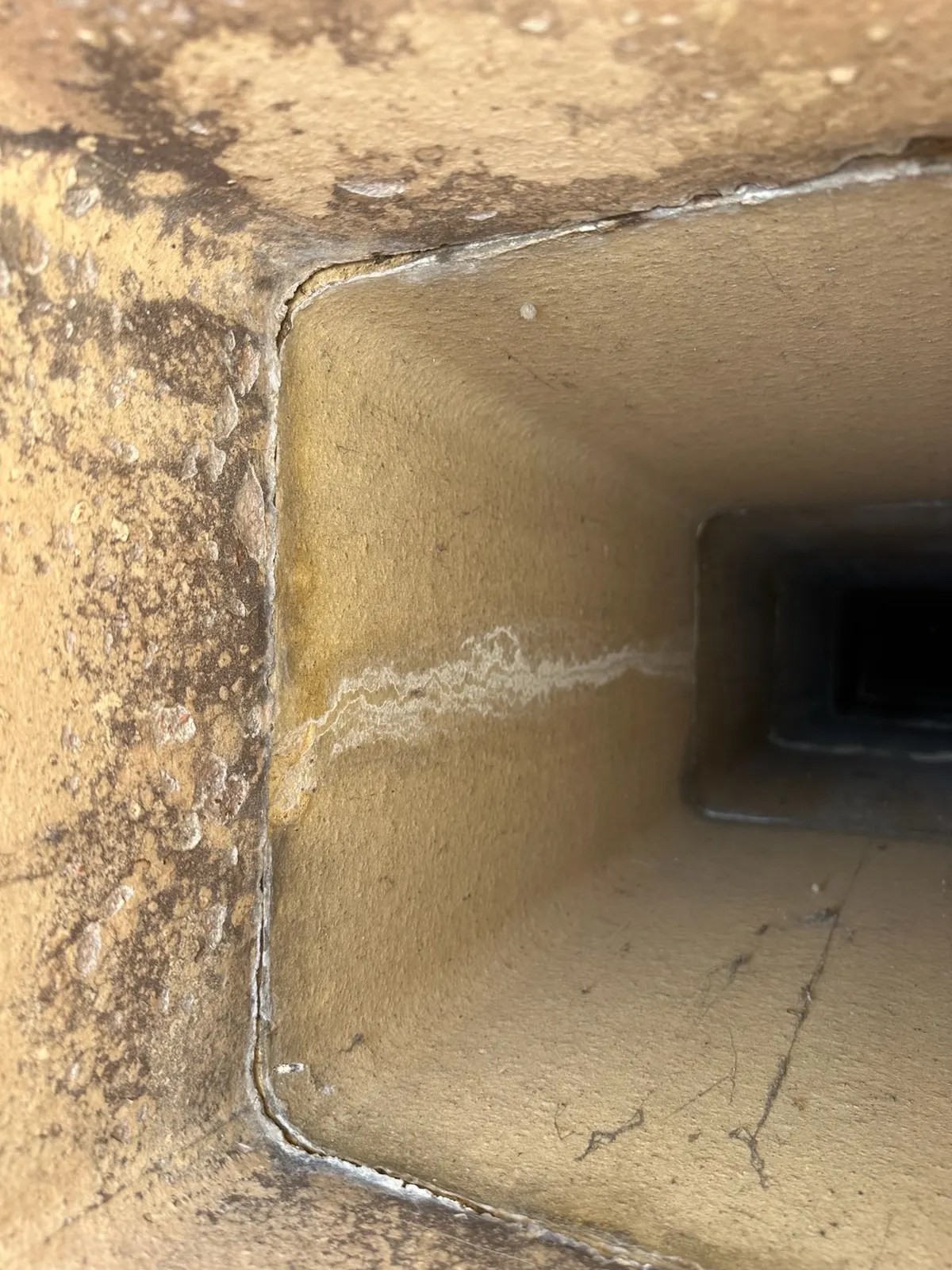
Every hour your burner runs, exhaust gases climb that flue: water vapor, carbon dioxide, and — with oil — sulfur compounds that mix with moisture into a mild acid. Clay tile liners absorb it for decades, until the mortar joints soften and the tiles crack and shift. Gas appliances are gentler on soot but produce large amounts of water vapor; an oversized old flue lets that vapor condense on the tile walls, which is its own slow damage. Add the thermal cycling of a burner firing on and off thousands of times a season, and you understand why heating flues fail from the inside out, invisibly.
The symptoms are easy to misread
A failing heating flue rarely announces itself as a chimney problem. It looks like: rust flakes and debris appearing at the base of the chimney or in the cleanout door; white or yellow staining on the outside of the stack; a furnace that soots, rumbles or trips its safety; exhaust smells in the basement on cold starts; or a carbon monoxide alarm that nobody can explain. Heating contractors see the appliance side of these symptoms and chimney companies see the flue side — and the fix often lives on our side of the wall.
Why the camera settles it
You cannot judge a heating flue from the basement thimble or from the roof. A Level 2 camera inspection runs the full height of the flue and shows the tile joints, the cracks and the blockages directly — including the classic failure where a section of tile has fallen and is bridging the flue, half-blocking the furnace's exhaust. That is a dangerous condition with a straightforward cure, and it is invisible without a camera. If your home is older, heats with oil, or the flue has never been inspected on record, this is the check to book.
Relining: the fix that resets the clock
When a heating flue's liner is done, the standard cure is a stainless steel liner sized exactly to the appliance — not the oversized masonry opening. Correct sizing matters doubly for gas: a right-sized, insulated liner keeps exhaust gases hot and moving, ending the condensation that killed the clay. For oil, stainless stands up to the sulfur chemistry that ate the tile. The work is typically a day, and the result is a flue with a manufacturer's lifetime warranty in most residential applications — plus, frequently, a furnace that drafts noticeably better than it has in years.
The bottom line
Treat the heating flue like the appliance it serves: inspected on a schedule, camera-checked when symptoms appear, and relined before it fails in February. Eagle Chimney Services inspects and relines heating flues across Philadelphia and Bucks, Montgomery, Chester and Delaware counties — call (855) 424-6217 and find out what is actually inside your chimney.
Need a Hand With Your Chimney?
Call (855) 424-6217 — phones answered 24/7, service Sunday through Friday across 165 Pennsylvania communities.